How New Push to Talk Technology Is Transforming Trucking and 4WD Driving with Starlink Connectivity
A truck convoy can lose time fast when one driver misses a turn. A 4WD group can lose safety just as quickly when the lead vehicle gets out of radio range in rough country. For years, drivers relied on CB, UHF, VHF, cellular calls, or satellite phones to stay in touch. Each still has a place, but new push to talk technology is changing what “radio communication” can mean on the road and beyond it.
Modern PTT is no longer limited to a short-range radio clipped to the dash. It can run over LTE, Wi-Fi, and satellite internet. With Starlink connectivity in the mix, truckers and 4WD drivers can keep voice groups active across much wider areas, including routes where cell coverage drops out.
The result is simple: press one button, talk to the group, and keep moving.

What modern push to talk actually is
Push to talk, often called PTT, gives users instant one-to-many voice communication. One person presses a button, speaks, and everyone on the selected channel hears the message.
Traditional radio systems send that voice directly over radio frequencies. Range depends on antenna height, terrain, power, and repeaters. That is why radios work well across a job site, convoy, or local trail group, but struggle across long distances without added infrastructure.
Newer PTT systems often work as PTT over IP or push to talk over cellular. Instead of only using radio waves from one handset to another, the system sends voice as data through an internet connection. That connection can be cellular, Wi-Fi, wired broadband, or satellite internet.
A typical modern PTT setup may include:
Rugged handheld devices with a physical talk button
Smartphone apps with on-screen or Bluetooth PTT buttons
Vehicle-mounted microphones and speakers
Dispatch software for fleet coordinators
Group channels for different teams, depots, convoys, or regions
GPS location sharing and status updates
Optional call recording for training, safety, or incident review
The biggest shift is coverage. Standard two-way radio range might be measured in miles. Internet-based PTT can connect vehicles across states, as long as each user has a working data connection.
That is where Starlink becomes especially interesting.
Why Starlink changes the coverage equation
Starlink uses low Earth orbit satellites to provide internet service in many areas where fixed broadband and cellular networks are weak or unavailable. For vehicle communication, that matters because PTT over IP does not need a cell tower if the vehicle already has a stable satellite internet link.
For trucking, this can help on rural freight corridors, remote delivery routes, logging roads, mining approaches, agricultural regions, and interstate stretches where cellular service fades. For 4WD driving, it can help on desert tracks, mountain areas, forest roads, and long overland trips.
Starlink is not a magic blanket for every location or every situation. Trees, canyon walls, severe weather, hardware placement, and service plan limits can affect performance. A mobile satellite internet setup also needs power, clear sky access, and secure mounting.
Still, the practical change is huge. A vehicle with satellite broadband can run:
PTT voice channels
Mapping and weather tools
Fleet tracking
Messaging apps
Maintenance alerts
Electronic paperwork
Video or photo uploads when appropriate
For PTT, Starlink’s value is not just internet access. It can give drivers a shared voice channel where normal mobile coverage cannot.
The key benefit is continuity. Drivers can keep the same PTT channel active as they move between city coverage, rural cell coverage, and satellite-backed remote coverage.
How trucking fleets can use PTT with Starlink
Trucking communication has always had two competing needs. Drivers need simple, fast voice contact. Fleet managers need visibility, coordination, and a record of what happened. Modern PTT can serve both without turning every update into a phone call.
Long-haul dispatch becomes more immediate
A dispatcher can speak to one driver, a route group, a regional group, or the entire fleet. Drivers do not need to dial, wait, or scroll through contacts. They hear the message through the cab audio or a dedicated speaker.
This helps with:
Route changes
Weather warnings
Pickup and delivery updates
Fuel stop coordination
Yard entry instructions
Detour notices
Load priority changes
When paired with satellite connectivity, the fleet does not lose that voice link as easily in rural areas. A driver in a low-coverage area can still receive a quick instruction, then respond without stopping.
Convoy and heavy haul coordination gets cleaner
Oversize, heavy haul, and convoy work depends on timing. Lead, rear, escort, and support vehicles need clear instructions. A delay of a few seconds can matter when approaching a bridge, turn, work zone, or tight ramp.
PTT channels can be set up around the job:
Lead vehicle
Rear vehicle
Pilot cars
Dispatch
Maintenance
Safety supervisor
Each group can use its own channel, while key people monitor multiple channels. Unlike open CB chatter, private PTT groups reduce noise and keep messages focused.
Driver safety improves when contact stays simple
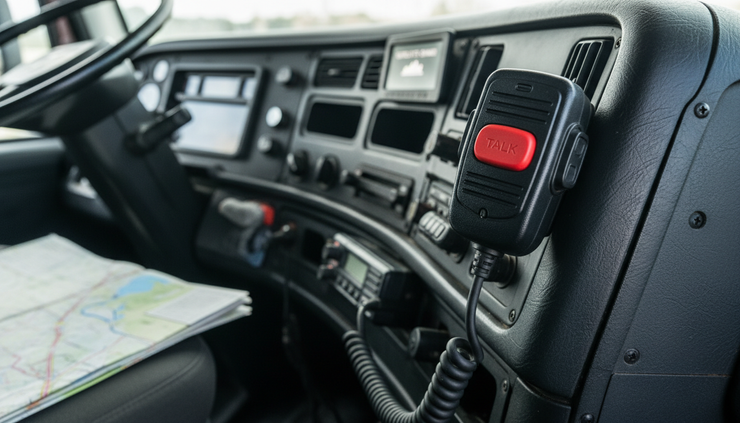
A good truck communication tool should not demand attention from the road. PTT works because it mirrors the familiar radio habit. Press, speak, release.
With the right hardware, drivers can use:
A steering wheel or dash-mounted PTT button
A speaker microphone
A rugged handset mounted within reach
A headset where legal and safe
Voice announcements for channel changes or alerts
The goal is less handling and less distraction, not more screens. Fleets should still follow hands-free laws, internal safety policies, and FMCSA-related requirements. PTT can support safer communication, but only when installed and used correctly.
How 4WD drivers can use PTT on remote tracks
For 4WD drivers, communication is part convenience and part safety system. Trails spread vehicles out. Dust, hills, creek crossings, and switchbacks can block line of sight. A convoy may only be a few minutes apart, but radio quality can drop fast.
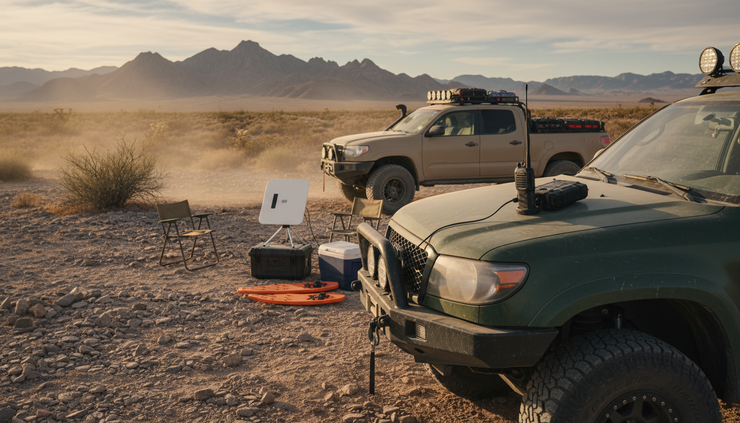
Traditional UHF and VHF radios still work well for local vehicle-to-vehicle talk. Many experienced off-road drivers will keep using them. New PTT adds another layer, especially when a group has internet through Starlink at camp or in one or more vehicles.
Groups can stay connected over longer distances
A 4WD convoy might split for fuel, scouting, camping, or recovery support. With internet-based PTT, the lead group can stay in contact with the tail group even when hills or distance would block normal radio.
For example, one vehicle may stop at camp with a Starlink setup while another checks a trail ahead. If both have data access, they can stay on the same PTT channel without relying on local radio range.
This can help during:
Track scouting
Recovery work
Camp setup
Supply runs
Multi-vehicle touring
Remote event support
Trail cleanups and volunteer work
Camp communication becomes easier
A Starlink-equipped camp can act as the communication hub for a group. Drivers returning from different routes can check in by PTT. People at camp can pass along weather updates, meal timing, mechanical issues, or route changes.
This is especially useful when the group includes mixed experience levels. Newer drivers can ask for guidance without trying to describe their position over a weak radio connection. If the PTT system includes GPS sharing, the group can also see where vehicles are, provided devices have location enabled and data access.
Recovery situations can be managed with less confusion
Recoveries can get noisy and tense. Winching, snatch recoveries, steep climbs, and water crossings require short, clear messages. PTT helps keep everyone on the same channel, while separate channels can keep bystanders and nonessential chatter away from the recovery team.
A simple channel plan might look like this:
Use case | Suggested PTT channel | Who should be on it |
Main convoy | Trail group | All vehicles |
Recovery work | Recovery team | Drivers, spotters, safety lead |
Camp | Base camp | Camp lead and trip leaders |
Emergency coordination | Priority channel | Trip leaders and support vehicles |
For serious remote travel, PTT should sit beside other safety gear, not replace it. A 4WD group should still carry appropriate recovery equipment, first-aid supplies, paper maps, offline maps, emergency beacons, and a clear trip plan.
Where PTT beats radio and where radio still wins
Modern PTT is powerful, but it does not make every older tool obsolete. The best setup often combines technologies.
PTT over IP is strong when distance matters. It can connect drivers across wide areas if each user has data access.
PTT can support private groups, GPS, logs, and dispatch tools. That makes it useful for fleets and organized trips.
Starlink can fill gaps where cell service is weak. This helps on remote freight and off-road routes.
Radio is strong when local simplicity matters. It can work vehicle to vehicle without an internet service, subscription, or satellite dish.
Radio can be faster to set up in a small convoy. Turn it on, choose a channel, and talk.
Radio can work under trees, near cliffs, or in short-range situations where satellite view is poor. Terrain still matters, but no sky-facing dish is needed.
A smart trucking fleet may use PTT as its main dispatch voice system while keeping CB or radio for local yard and road chatter. A smart 4WD group may use UHF or VHF for close convoy talk and PTT through Starlink for longer-range coordination.
The right question is not “Which one wins?” The better question is “Which tool should carry which message?”
What to look for in a PTT system
The best PTT system for a trucking company is not always the best one for a weekend 4WD group. Still, several features matter in both settings.
A real button matters
Touchscreen PTT can work, but a physical button is better in a moving vehicle. Look for a rugged handset, speaker mic, Bluetooth button, or installed dash control. Drivers should be able to talk without hunting through menus.
Audio must be loud and clear
Truck cabs, diesel engines, wind, gravel roads, and recovery work all create noise. Good PTT hardware needs strong speakers, noise reduction, and simple volume control. If users cannot hear messages, the system fails.
Channels should be easy to manage
Groups need clear channel names and permissions. A fleet might create channels by state, customer, route, or terminal. A 4WD group might create channels for convoy, camp, repairs, and emergency coordination.
Avoid clutter. Too many channels cause missed messages.
It should handle poor connections gracefully
Remote connectivity can come and go. A useful PTT platform should reconnect cleanly, show connection status, and avoid confusing delays. Some systems can store short messages or show missed call alerts, depending on the platform.
Location sharing can help, but privacy needs rules
GPS location can be valuable during dispatch, off-road touring, and emergency response. It also raises privacy concerns. Fleets should explain when tracking is active, who can see it, and how records are handled. Recreational groups should get clear consent before sharing locations.
Backup communication remains essential
No single system is perfect. Starlink, cellular, radios, and devices can fail. Power issues, damaged antennas, wrong channels, or blocked sky views can break the chain.
For trucking, backup plans may include cellular calls, company telematics, CB, roadside assistance processes, and emergency services. For 4WD travel, backup plans may include UHF or VHF radio, satellite messengers, personal locator beacons, offline maps, and agreed check-in times.
Practical setup ideas for trucking
A fleet does not need to change everything at once. Many start with a pilot group and expand after drivers prove what works.
A practical rollout might include:
Choose the use case
Start with one problem, such as remote route communication, heavy haul coordination, or yard-to-driver voice.
Test hardware in real cabs
Try speaker mics, mounted buttons, and vehicle speakers. Drivers will quickly find weak mounting positions, low audio, or annoying controls.
Create simple channel rules
Keep channel names clear. Decide who can speak on all-fleet channels and which messages belong in priority channels.
Pair Starlink with routes that need it
Satellite internet makes the most sense where cell service regularly fails or where the truck already needs broadband for other tasks.
Train for short voice discipline
Good PTT messages are brief. Use names, locations, and clear requests. Long speeches block the channel.
A basic dispatch message might sound like: “Unit 214, take the north entrance. Scale is backed up. Reply when clear.”
That is the kind of message PTT handles best.
Practical setup ideas for 4WD trips
For off-road travel, the best communication plan is simple enough that every driver can follow it under stress.
Before the trip, decide:
Which radio channel handles local convoy talk
Which PTT group handles long-distance or camp communication
Which vehicle carries Starlink gear
When the satellite system will be powered on
Who monitors the priority channel
What check-in times the group will use
What to do if a vehicle misses a check-in
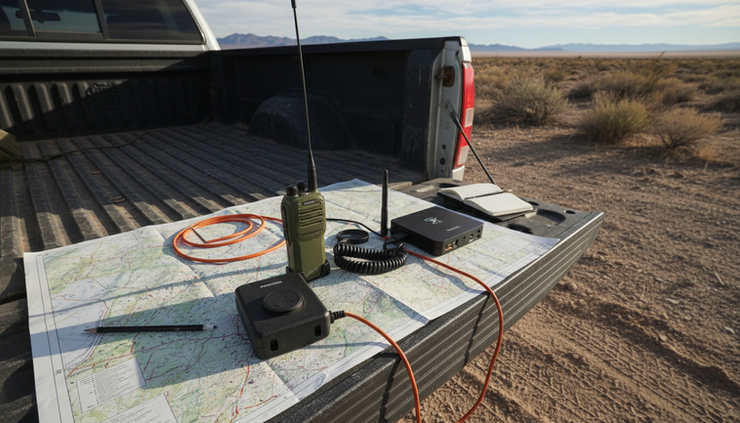
Mount equipment where it will not fly around on corrugations, rocky climbs, or sudden stops. Protect cables from doors, drawers, and cargo. Test everything before leaving pavement.
A good field test should include more than “Can we hear each other?” Try the system with engines running, windows down, vehicles spread apart, and one vehicle moving. Check how fast devices reconnect after power loss or a blocked signal.
The future is layered communication
The most useful vehicle communication systems will mix several paths instead of betting on one. A truck may use cellular in town, Starlink on remote stretches, and radio in the yard. A 4WD group may use UHF for close convoy work, Starlink-backed PTT for wide-area contact, and a satellite beacon for emergencies.
How New Push to Talk Technology Is Transforming Trucking and 4WD Driving with Starlink Connectivity comes down to one practical change: voice communication can now follow the vehicle much farther than traditional short-range radio could.
The technology works best when people keep it simple. Set clear channels. Use physical buttons. Train drivers to send short messages. Test gear before the route. Keep backups ready.
For truckers, that means fewer dead zones, faster dispatch updates, and better coordination across long routes. For 4WD drivers, it means stronger group contact, safer remote touring, and a better way to manage camp, convoy, and recovery communication.
PTT will not replace every radio, phone, or emergency device. It does not need to. Its real value is giving drivers one more reliable way to speak when timing, distance, and terrain make communication hard.

Comments